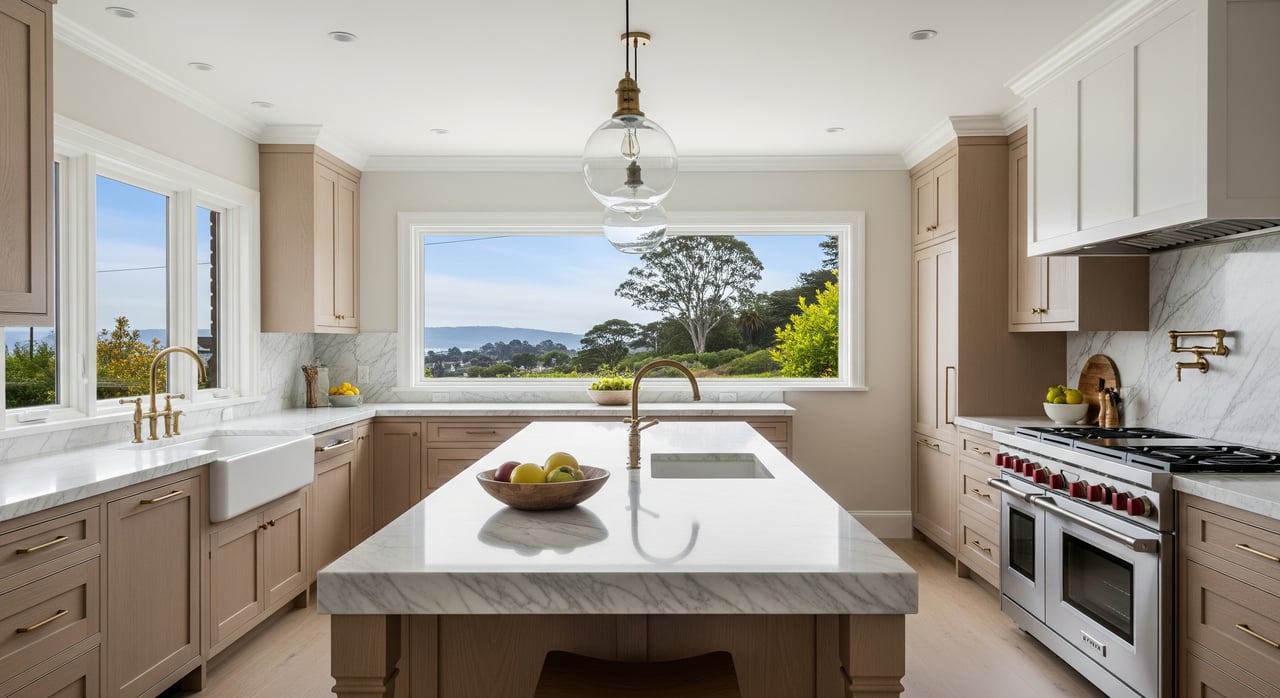
Thinking about opening up your Kensington kitchen or reworking a dated bath? Before you swing a hammer, it pays to understand how permits work in unincorporated Contra Costa County. A little planning now can save you time, money, and stress later, especially when you go to sell. In this guide, you’ll learn what work needs a permit, how the process unfolds, typical timelines and fees, and how permits affect resale value. Let’s dive in.
Who regulates permits in Kensington
Kensington is unincorporated, so Contra Costa County is your permitting authority. The county’s Building Inspection and Conservation and Development teams handle applications, plan checks, and inspections. Depending on your scope, the Kensington Fire Protection District and local utilities may also review gas, ventilation, or service upgrades.
California’s statewide codes apply, including the California Building Standards Code and Energy Code under Title 24. If your project value is at or above California’s threshold for licensed contracting, you must use a properly licensed contractor and list their CSLB license on the application.
When you need a permit
Most work that touches structure or building systems requires a permit. In kitchens and baths, common triggers include:
- Moving or removing walls, adding openings, or other structural changes.
- Relocating or adding plumbing fixtures, or altering drains or soil stacks.
- Installing or relocating gas lines or gas appliances such as ranges and water heaters.
- Adding or modifying electrical circuits, panels, or 240V appliances.
- Replacing or adding mechanical equipment, including bath exhaust fans and vented range hoods.
- Changes that affect egress, smoke or CO detection, or accessibility features.
- Any scope that requires structural calculations or engineering, such as removing a load-bearing wall.
When in doubt, confirm with the county before starting work.
What may not need a permit
Cosmetic upgrades that do not alter structure or building systems are often exempt. Examples include:
- Painting, cabinet refacing, and simple countertop swaps that do not move plumbing.
- Replacing faucets or like-for-like light fixtures on existing circuits.
Local inspectors may interpret specifics differently based on your scope. If you are unsure, ask the county to verify.
What to submit with your application
Contra Costa County will tell you exactly what you need, but most kitchen or bath remodels ask for:
- Application basics: owner or contractor information, property address and APN, contractor’s CSLB license number and insurance where required.
- Plans: existing and proposed floor plans with dimensions, fixture and appliance locations, and any wall or opening changes. Include a site plan if exterior elements are affected.
- Technical documents: structural plans and calculations for headers or beams, plumbing and electrical plans with load calculations for panel upgrades, and mechanical details for exhaust and hood venting.
- Product information: cut sheets for appliances, hoods, water heaters, or mechanical equipment if requested.
- Code compliance: Title 24 Energy Code documentation for lighting, HVAC, or water-heating changes, plus any required CALGreen measures.
- Other approvals: Fire District sign-offs for applicable fire-safety work, and any special planning or historical review if your property falls under an overlay.
Step-by-step permit process
- Pre-application: Contact the county permit center to verify your scope and confirm whether a pre-application meeting is helpful, especially if structural work is involved.
- Submit application: File online or at the public counter with your plans and supporting documents.
- Plan check: County reviewers assess structural, electrical, plumbing, mechanical, zoning, and fire-safety compliance.
- Corrections: Expect at least one round of comments on nontrivial projects. Your design team updates plans and resubmits.
- Permit issuance: After approvals and fee payment, your permit is issued and you can schedule inspections.
- Inspections: Coordinate rough and final inspections with your contractor as milestones are reached.
- Final sign-off: Keep your signed-off permit and approved plans for your records and future buyers.
Typical timelines and fees
- Plan review: Simple scopes can see a few business days to 2 to 3 weeks. Structural or multi-trade remodels often take several weeks or longer, depending on corrections and staffing.
- Inspections: Routine slots are commonly available within a few days to two weeks once your permit is active.
- Overall permitting: Plumbing-only or similar small permits can wrap in weeks. Full kitchen remodels with multiple trades typically need 1 to 3 months for permitting alone. Construction time is separate.
- Fees: The county bases fees on project valuation. Expect a few hundred dollars for minor scopes and several thousand dollars for extensive remodels.
Build a conservative timeline, and ask the county for a project-specific estimate so you can align your contractor’s schedule.
Inspections you can expect
Kitchen and bath projects usually include:
- Demolition or initial safety checks if required.
- Rough inspections: framing and structural, rough plumbing, rough electrical, and rough mechanical including ducting and gas piping.
- Special inspections as needed, such as gas pressure tests or engineered connections.
- Insulation or air-barrier checks if walls were opened.
- Drywall inspection where required.
- Final inspections: building, plumbing, electrical, and mechanical, plus smoke and CO detector verification.
Passing each inspection is necessary to reach final sign-off.
Why permits matter at resale
Permitted work is more than a checkbox. It signals code compliance and reduces risk for buyers, lenders, and insurers. During escrow, unpermitted alterations often trigger concerns, price reductions, lender conditions, or escrow holds. Insurers may also deny claims tied to unpermitted work.
California sellers must disclose known alterations and conditions. Buyers commonly ask for permit records for major remodels. If you inherited unpermitted work, the county may allow retroactive permits with as-built plans. You should expect plan review, possible upgrades to current code, and potential fines. In many cases, resolving permits before listing improves marketability and helps keep your escrow on track.
Kensington-specific tips
- Start with the county: Confirm your scope and ask if a pre-application meeting is recommended.
- Get timeline expectations: Ask for plan-check targets in writing so you can plan around contractor availability.
- Hire licensed pros: California requires licensed contractors for projects at or above the state threshold. Verify licensing and insurance.
- Coordinate early: If you have gas appliances, exterior venting, or suppression considerations, check in with the Kensington Fire Protection District and relevant utilities.
- Plan for energy and ventilation: Title 24 lighting rules and proper bath and kitchen ventilation are common inspection points.
- Keep great records: Save permits, approved plans, inspection sign-offs, and final documents. Scan them so you can provide them to buyers and your escrow team.
Simple prep checklist
- Define your scope and note any structural, plumbing, electrical, or gas changes.
- Verify permit requirements with the county.
- Select a licensed contractor and confirm who will prepare plans and submit.
- Assemble drawings, specifications, and any Title 24 documentation.
- Ask for estimated plan-check timelines and fees.
- Schedule work to align with expected inspections.
- Keep all approvals and finals for your records and future resale.
If you are planning to remodel with a future sale in mind, getting your permits and final sign-off now can help your home show better on paper and in person. For guidance on how permitting choices may influence marketability and timing in Kensington and the greater Berkeley-Oakland corridor, reach out to Portia Pirnia.
FAQs
Do Kensington kitchen or bath remodels need permits?
- Yes for most work that changes structure or building systems such as plumbing, electrical, mechanical, gas, or egress. Cosmetic-only updates often do not require a permit, but confirm with Contra Costa County.
What is the typical Contra Costa County plan-check timeline?
- Simple scopes can see a few business days to 2 to 3 weeks. Structural or multi-trade remodels often take several weeks to months depending on complexity and correction cycles.
How much do kitchen or bath permits cost in Kensington?
- Fees are valuation-based. Expect a few hundred dollars for minor work and several thousand dollars for extensive remodels. The county sets exact fees during application.
What inspections should I expect for a bath remodel?
- Rough plumbing, electrical, and mechanical, plus framing if walls move, insulation or air-barrier if relevant, drywall where required, and final building, plumbing, electrical, and mechanical inspections.
Can I replace kitchen finishes without a permit?
- Many finish updates such as painting, cabinet refacing, and countertop swaps are often exempt if they do not move plumbing or alter systems. Verify your exact scope with the county.
How do unpermitted upgrades affect resale in Kensington?
- Unpermitted work can slow or jeopardize escrow, invite lender conditions, and reduce buyer confidence. Retroactive permits may be possible, and resolving issues before listing typically improves marketability.
Do I need a licensed contractor for my remodel?
- California requires licensed contractors for projects at or above the state’s threshold. County applications typically request the contractor’s CSLB license number and insurance details.